
In recent years, the world has increasingly focused on the transition to clean and sustainable energy. Dependence on coal is being reconsidered due to its environmental impact and high carbon emissions. Amid these changes, sustainable briquette alternatives to coal have begun to emerge as a more eco-friendly and efficient solution.
Various energy innovations have also developed, including environmentally friendly briquettes that offer stable heat and low emissions. The concept of sustainable briquette alternatives to coal for clean energy, known as jacoid, is becoming more relevant as the demand for safe and sustainable energy continues to grow.
The importance of sustainable briquettes as an alternative energy source
Sustainable briquettes are designed to replace coal in various sectors such as industry, households, restaurants, and commercial activities that require high heat. Unlike coal, which is derived from fossil materials formed over millions of years, sustainable briquettes are made from natural biomass such as coconut shells, sawdust, bamboo, straw, and other agricultural residues.
Their main advantage lies in a more environmentally friendly production process. Biomass that is often considered waste can be processed into a new source of clean energy with economic value and a lower carbon footprint. In addition, the combustion of biomass briquettes produces less smoke and pollution, improving safety and comfort for users, especially in spaces where air quality must be maintained.
Popular types of sustainable briquettes
1. Coconut Shell Briquettes
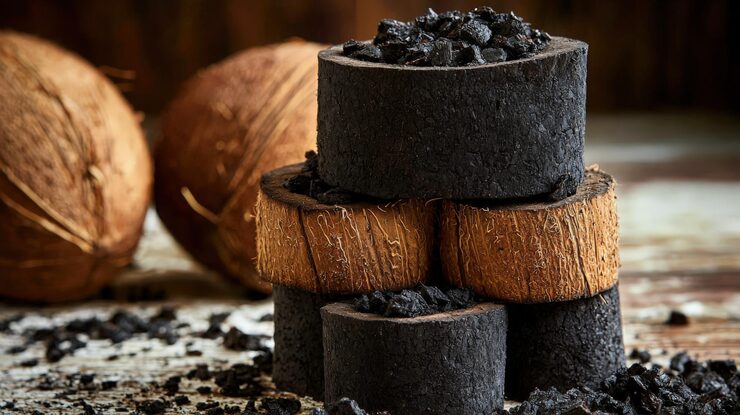
One of the most recognized forms of sustainable briquette alternatives to coal for clean energy is coconut shell briquettes. They are known for their stable heat, long burning time, and very low ash content. The food industry—especially barbecue restaurants and small businesses—relies heavily on these briquettes because they produce clean heat without altering the flavor of food.
2. Wood Briquettes
These briquettes are widely used in home heating systems in colder countries. Compressed sawdust creates high-density briquettes that burn more efficiently and consistently than regular firewood. Their use also reduces wood waste from the furniture industry.
3. Bamboo Briquettes
With bamboo being a fast-growing and renewable resource, bamboo briquettes have become a highly sustainable energy option. They ignite quickly and produce strong heat, making them suitable for small industries and household use.
4. Agricultural Waste Briquettes
Agricultural residues such as rice husks, corn cobs, or bagasse can be transformed into quality briquettes. Besides solving waste problems, these briquettes offer an affordable, clean, and easily mass-produced energy source for rural areas.
Benefits of using sustainable briquettes
Replacing coal with sustainable briquettes provides numerous benefits for both the environment and the local economy. Some of the key advantages include:
-
Reduced carbon emissions, as biomass absorbs CO₂ during growth and releases lower emissions when burned.
-
Higher energy efficiency, since biomass briquettes typically have high density and produce strong, stable heat.
-
Waste utilization, increasing economic value while reducing environmental pollution.
-
Improved air quality, because sustainable briquettes produce minimal smoke and sulfur, making them safe for commercial and household kitchens.
-
Support for local economies, especially in regions producing coconut, wood, or agricultural commodities.
Towards a clean energy future
As the impacts of climate change become more evident and global demand for clean energy continues to rise, the use of sustainable briquette alternatives to coal for clean energy represents a strategic and realistic shift. Many industries are now switching to biomass-based briquettes—such as coconut shell charcoal briquette—because their performance matches or even surpasses coal while producing much lower environmental impact.
This transition is not only a choice but also a vital investment for a greener future. With the support of innovation, education, and environmental awareness, sustainable briquettes like coconut shell charcoal briquette will continue to grow as one of the most effective and accessible clean energy solutions across various sectors.