
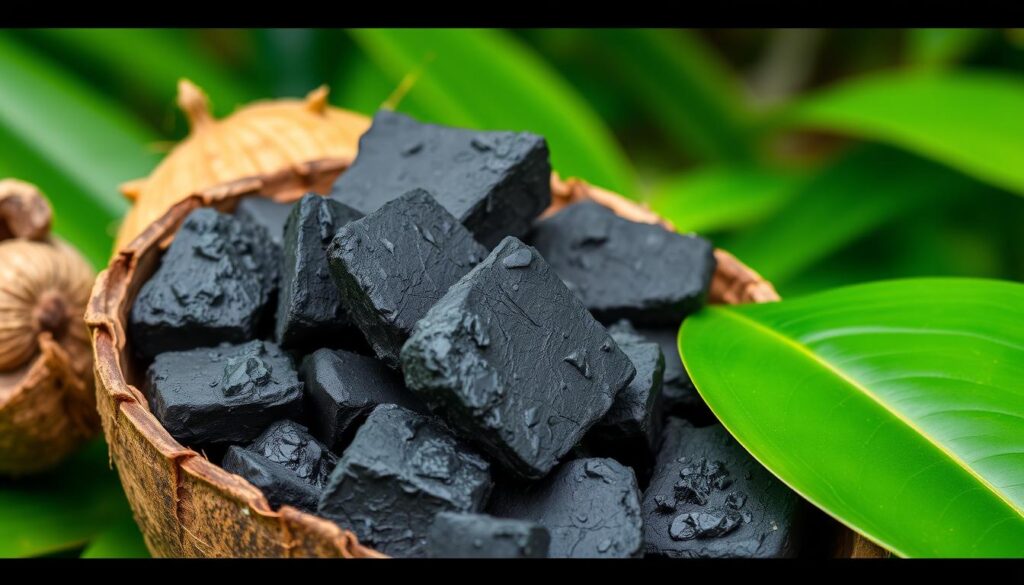
As the global demand for renewable and eco-friendly fuel continues to rise, the renewable coconut husk briquette has emerged as a promising alternative to conventional energy sources. Made from the fibrous outer shell of coconuts—commonly discarded as waste—these briquettes offer an environmentally responsible solution that transforms agricultural residue into clean, efficient fuel.
With its sustainable sourcing and minimal emissions, the coconut husk briquette stands out as an ideal green fuel option for modern energy needs. As more industries seek cleaner alternatives, the coconut husk briquette continues to gain recognition as a reliable and eco-friendly energy source.
What Are Coconut Husk Briquettes
Coconut husk briquettes are compact fuel blocks made by pressing the coarse fibers found between the outer layer of the coconut and its hard inner shell. This biomass product is primarily composed of coconut husks, which are typically considered agricultural waste. Instead of allowing these husks to rot or burn inefficiently, they are processed into briquettes that can be used for cooking, heating, and even industrial applications.
These briquettes burn longer and cleaner than traditional wood or charcoal, producing less smoke and harmful emissions. Because coconut husks are a renewable agricultural byproduct, their use also helps reduce dependency on non-renewable fossil fuels.
The Production Process
The process of creating renewable coconut husk briquettes involves several steps:
1. Collection & Drying
The coconut husks are collected and thoroughly sun-dried to reduce moisture content, which is critical for efficient combustion.
2. Grinding
Once dried, the husks are ground into a fibrous powder or small particles.
3. Compression
The shredded coconut husk material is compacted under intense pressure with the help of a briquetting machine. Typically, no additional binders are needed since the husk’s natural lignin functions as an adhesive during the process.
4. Carbonization (optional)
For charcoal briquettes, the compressed material may be carbonized in a kiln to increase its energy density and reduce smoke when burned.
Benefits of Coconut Husk Briquettes
-
Eco-Friendly
Coconut husk briquettes are made from agricultural waste, reducing landfill use, deforestation, and emissions. They offer a cleaner, low-carbon alternative to wood charcoal and support a circular economy by turning waste into renewable energy.
-
Renewable
Coconuts grow year-round in tropical regions, ensuring a steady supply of raw material.
-
Cost-Effective
Especially in coconut-producing countries, production is low-cost and supports rural economies.
-
Efficient
Longer burning time and higher heat output than firewood or loose biomass.
-
Low Emissions
Generates very little smoke, making it a safer and healthier choice for indoor household use.
Applications
Renewable coconut husk briquettes are used in various sectors:
-
Used for household cooking in both rural and urban settings, these briquettes offer a cleaner and more sustainable option compared to traditional firewood.
-
Restaurants and street food vendors for BBQ and grilling.
-
Industries requiring sustainable heat sources, such as brick kilns, tea drying, or tobacco curing.
-
Export markets, especially in Europe and Asia, where demand for eco-friendly fuel is growing.
Conclusion
Renewable coconut husk briquettes offer a clean, efficient, and eco-friendly energy alternative. Made from agricultural waste—specifically coconut husks—these briquettes help reduce environmental pollution while turning organic byproducts into valuable fuel.
The production process is relatively simple, and the raw material is abundant in tropical regions, making it a practical and sustainable choice. Coconut husk briquettes support circular economy efforts and help reduce fossil fuel use. In the transition to greener energy, they present a hopeful solution for achieving a more sustainable future.
As the world embraces cleaner energy sources, coconut husk briquettes are emerging as an important contributor to a more sustainable energy landscape. To learn more about innovations in eco-friendly fuel and how coconut-based briquettes are being developed and marketed, visit jacoid.com.