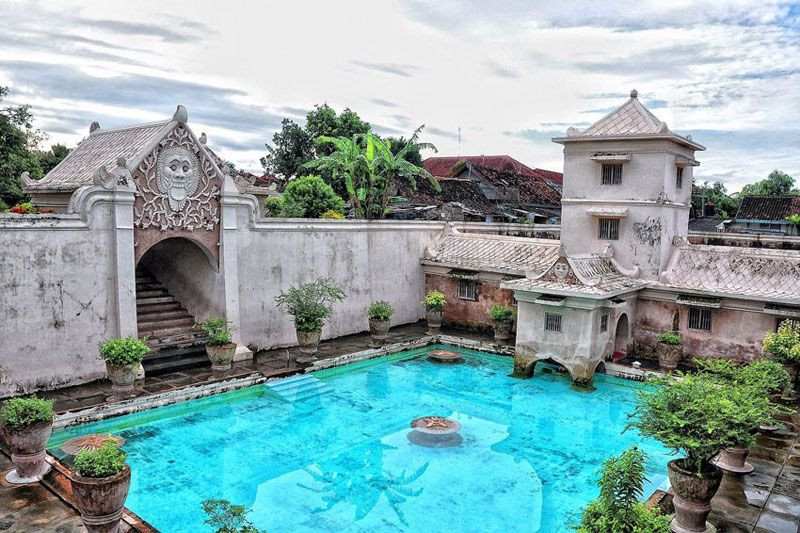
The Taman Sari underground tunnels are among the most intriguing features of Yogyakarta’s historic royal complex. Hidden beneath and around the former garden, these passages reveal another side of Taman Sari that visitors may not notice when exploring its pools, gates, and open courtyards.
The tunnels were part of a much larger architectural plan. Together with underground structures, water features, and royal buildings, they helped connect different sections of the complex.
Understanding the Underground Passages
Taman Sari was developed as a large royal complex during the eighteenth century. Its original layout included gardens, artificial waterways, bathing areas, buildings, and underground routes.
The Taman Sari underground tunnels formed part of this connected environment. Some passages linked important structures, allowing movement between different sections of the complex.
Historical records describe underground routes connecting areas around Pulo Kenanga and other parts of Taman Sari. These passages demonstrate how the complex was designed as more than a collection of separate buildings.
Travelers who want to understand the wider layout can explore this Taman Sari Water Castle complete guide before visiting.
Connecting Pulo Kenanga and Other Areas
Pulo Kenanga is one of the important structures associated with the underground routes. Historical descriptions indicate that access to Pulo Kenanga could be reached through passages on its southern and western sides.
The structure once stood within a large artificial water area known as Segaran. Because water surrounded parts of the complex, underground routes provided an alternative connection between several locations.
This combination of waterways and tunnels made Taman Sari’s original design particularly distinctive.
Today, the surrounding landscape is very different from the historical setting. The artificial lake no longer covers the area around Pulo Kenanga, allowing visitors to see the remaining structures from the surrounding streets and neighborhoods.
Underground Routes and Royal Architecture
The tunnels should not be viewed separately from the rest of Taman Sari. They were integrated into the site’s overall design.
The complex included different areas for royal recreation, residence, religious activities, and other functions. Underground passages helped create connections between some of these spaces.
Their presence also shows the level of planning involved in developing Taman Sari. Architects had to consider movement, water, buildings, and the surrounding landscape as parts of one large system.
Exploring Sumur Gumuling
Sumur Gumuling is another structure closely associated with the underground section of Taman Sari. Its circular form and unusual internal arrangement make it one of the most recognizable parts of the complex.
The structure contains interconnected spaces and stairways. Its enclosed design creates a very different atmosphere from the open bathing pools at Umbul Binangun.
Exploring this area can help visitors understand how the different architectural elements of Taman Sari worked together.
Tips for Exploring Taman Sari
Wear comfortable footwear when exploring Taman Sari because the site includes several areas with different surfaces and walking conditions.
Follow local access rules when entering underground sections. Some passages may have restricted access depending on preservation work, safety conditions, or site management.
If you are planning other cultural experiences around Yogyakarta and Central Java, Borobudur Tours can also be considered when organizing your itinerary.
Discover Taman Sari’s Hidden Side
The Taman Sari underground tunnels reveal an important part of the complex’s original design. Alongside Pulo Kenanga, Sumur Gumuling, bathing pools, and former waterways, they demonstrate the architectural complexity of this historic royal site.
Exploring these surviving passages allows travelers to discover a less obvious side of Yogyakarta’s heritage while gaining a deeper appreciation of Taman Sari’s remarkable history.