The Borobudur temple structure is one of the most remarkable examples of Buddhist architecture in Southeast Asia. Built with a carefully organized design, the monument combines terraces, galleries, relief panels, Buddha statues, stupas, and symbolic levels. Understanding its structure helps visitors appreciate Borobudur beyond its impressive appearance.
The Overall Structure of Borobudur
Borobudur has a distinctive stepped form that rises gradually toward a central stupa. Its architectural layout consists of square terraces at the lower levels and circular platforms near the top. This arrangement creates a visual transition from a detailed lower section to a more open upper area.
The monument is also designed around movement. Visitors traditionally follow paths around the terraces while gradually ascending through the different levels. Each section offers different architectural details and artistic elements.
For travelers interested in the monument’s design, our Borobudur inside guide provides a deeper look at its structure, reliefs, and symbolic meaning.
Square Terraces and Relief Galleries
The lower part of the Borobudur temple structure features several square terraces. These terraces form a series of galleries decorated with extensive relief panels. The carvings depict stories, religious teachings, daily activities, and scenes connected with Buddhist traditions.
The gallery layout also creates a defined walking route around the monument. As visitors move through each level, they can observe how the reliefs and architectural details change.
Stone walls separate different sections of the galleries, while stairways connect the terraces vertically. This combination makes the monument feel both monumental and carefully organized.
Circular Platforms and Stupas
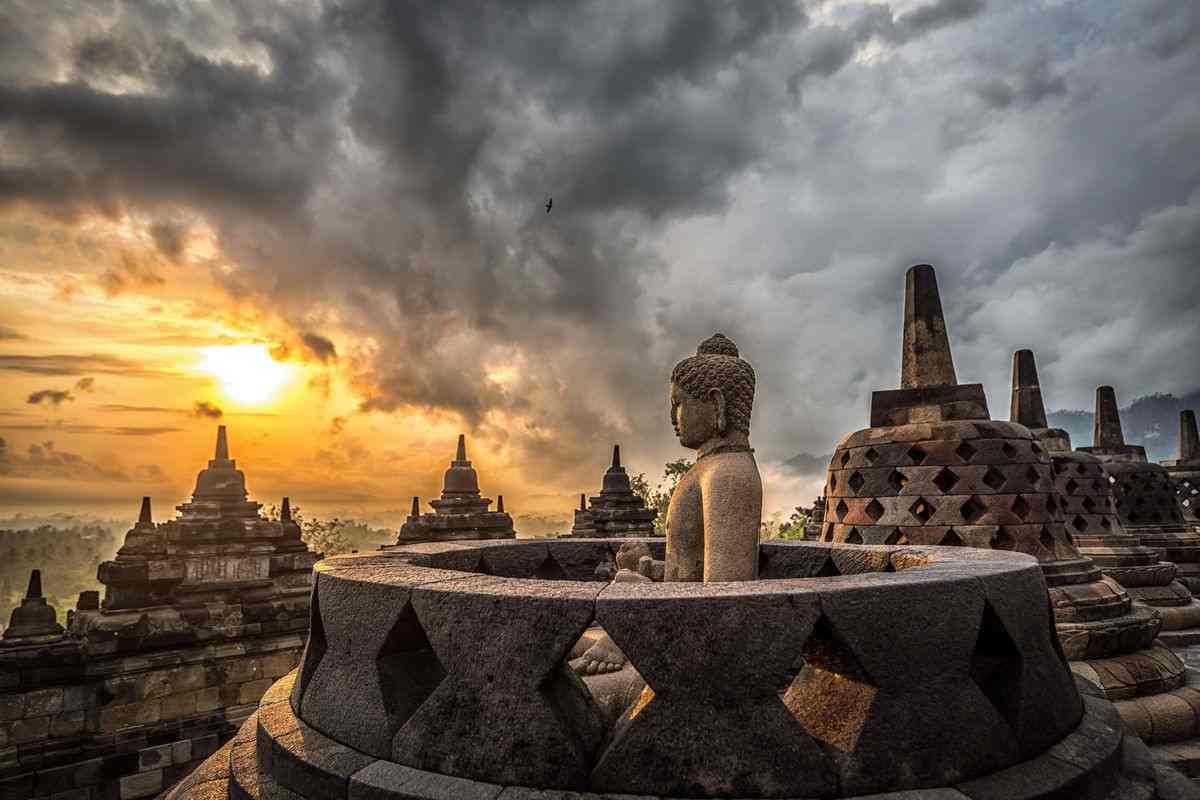
As the structure rises, the square terraces transition into circular platforms. These upper levels have a different visual character because they contain rows of perforated stupas rather than extensive wall reliefs.
Each stupa has a distinctive bell-like form with a Buddha statue positioned inside. The arrangement creates a repeating architectural pattern around the upper platforms.
At the highest point stands the large central stupa. Unlike the surrounding perforated stupas, it has a solid appearance and serves as the visual focus of the monument.
Buddha Statues and Architectural Balance
Buddha statues are an important part of the Borobudur temple structure. Many statues are positioned within niches along the square galleries, while others appear inside the upper stupas.
Their placement contributes to the monument’s overall balance. The combination of statues, stupas, terraces, and stone walls creates a carefully planned composition rather than a random collection of decorative elements.
The architectural design also allows visitors to experience different perspectives as they climb. Lower levels feel more enclosed and detailed, while the upper platforms feel increasingly open.
The Symbolism Behind the Structure
Borobudur’s architectural arrangement is closely associated with Buddhist cosmology. Its progression from the lower levels toward the upper circular platforms is commonly interpreted as a symbolic journey toward spiritual development.
This makes the structure more than an impressive stone monument. Its architectural organization connects physical movement with religious ideas.
Understanding this concept can make a visit more meaningful because every terrace, pathway, relief, and stupa forms part of a larger design.
Exploring Borobudur’s Architectural Heritage
Studying the Borobudur temple structure reveals how architecture, sculpture, storytelling, and religious symbolism work together. The monument’s terraces create a clear route, while its reliefs and statues provide visual narratives throughout the journey.
For travelers planning to explore Central Java’s cultural attractions, Borobudur Tours can provide opportunities to discover Borobudur alongside other important destinations in the region.
Borobudur remains a fascinating destination for anyone interested in ancient architecture. By looking closely at its structure, visitors can better understand why this historic monument continues to attract travelers from around the world.